Summer vacation
Even If This Love Disappears From the World TonightSummer vacation is the first sustained break in the school routine that has helped Maori Hino navigate anterograde amnesia. Without classes to organize the day, each morning brings the knowledge of her condition without the structure that once carried her forward. The season therefore exposes a central tension of her life: she may lose conscious memories overnight, yet can still make choices, practice a skill, and leave something for her next self to continue. Drawing becomes the answer she develops—not a cure, but a way to make the days accumulate.
A Break in the School Routine
Before the vacation begins, Tooru Kamiya considers what the unstructured days may mean for Maori. During the school year, the routine gives her a familiar framework; during summer, she will wake, consult her notebooks, and re-learn her circumstances without the day’s classes to occupy her. Tooru hopes she might find a hobby and a subject she can return to across many days, so that one version of Maori can leave work for the next. The idea makes continuity a practical question: what can she carry forward when ordinary recollection cannot do it for her?
A late lunch and walk with Tooru and Izumi Wataya lead into a conversation about the coming break. Izumi expects to help her mother and read; Tooru says he has no hobbies. When he asks whether Maori will draw, she nods, though summer is only just approaching. The exchange is modest, but it turns the possibility of drawing from an abstract suggestion into a choice she can make for herself.
The First Days of Summer
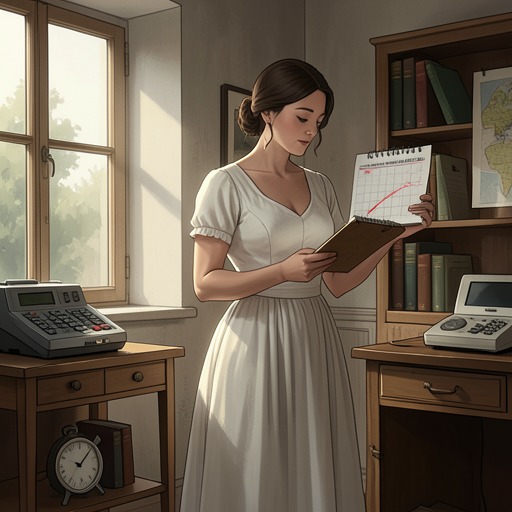
On August 4, Maori records a day spent mostly at home: drawing in the afternoon, thinking about a goal for the number of pictures she might finish, and completing three simple still lifes. The dated journal gives the new practice a measurable beginning. A goal can be made anew each day, but the drawings themselves remain, allowing effort to gather in a form that is not dependent on her waking with yesterday’s memories intact.
The first mornings are not easy. When Maori wakes to discover that school is out, she cannot manage a smile; time seems to move on while she is left behind. She looks at the callus on the middle finger of her right hand, physical evidence of the hours she once spent studying to enter the advanced class in her second year of high school. Now the callus is fading, and she fears that effort cannot make her smarter if the knowledge will not stay. The physical trace of an old discipline makes the loss concrete: the body remembers labor even when labor no longer promises the same result.
Drawing as a Practice That Accumulates
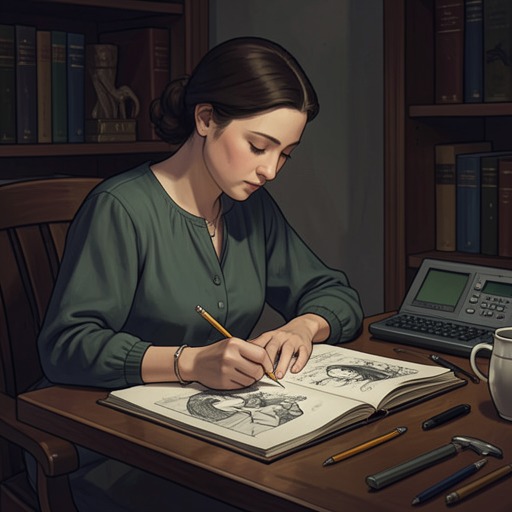
A sketchpad on Maori’s desk contains a portrait of a teenage boy she barely recognizes, identified in her notes as her boyfriend. The book also holds figure drawings. She had stopped making art when she began high school to concentrate on studying, but during summer vacation she has started drawing every day. Across a few dozen pages, improvement is slow rather than dramatic; still, she can see herself advancing, turtle-like, and her callus has not entirely disappeared.
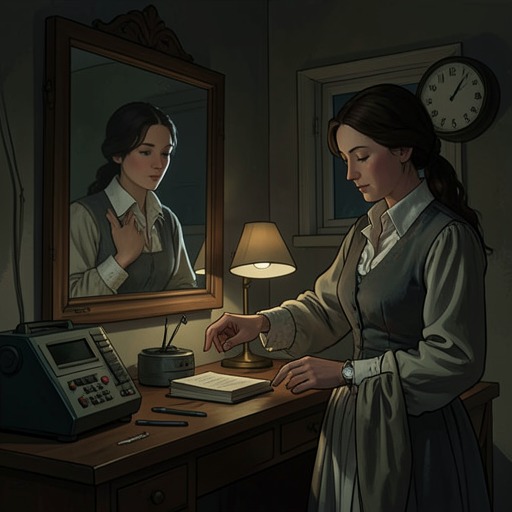
The binder explains how she and her earlier selves arrived at this practice. After learning the term procedural memory, they reasoned that a kind of physical memory might remain available even when episodic memories did not, making gradual improvement possible. Maori finds that the idea bears out: the older pictures testify to progress. She also learns that procedural memory is called implicit memory and can be developed through repeated activities such as drawing or practicing music. On a day with little else to do, she reads the binder’s section on art and works on croquis sketches that her recent selves have been practicing. Notes, drawings, and bodily familiarity form different but connected supports for the same ongoing effort.
The Season’s Place in a Longer Arc
The summer practice answers a concern Tooru had voiced before the break: that Maori might have too much time, too few distractions, and no shared school day to lend shape to her experience. Drawing gives her an activity that does not require her to retain each lesson as explicit knowledge. Instead, the work can be repeated, and its evidence can survive from one day to the next. The resulting continuity is limited but real: she may not remember making a picture, yet the page and the developing skill show that her earlier effort mattered.
The school routine eventually resumes, and the years continue through exam preparation and the final spring of high school. All three friends graduate. Maori has made substantial progress in drawing and plans to attend art classes several times a week while waiting for her amnesia to be cured. Summer vacation thus matters not simply as a pause in the academic calendar but as the period in which drawing becomes a durable pursuit—one that gives her days a direction when school is absent and remains hers beyond the break.